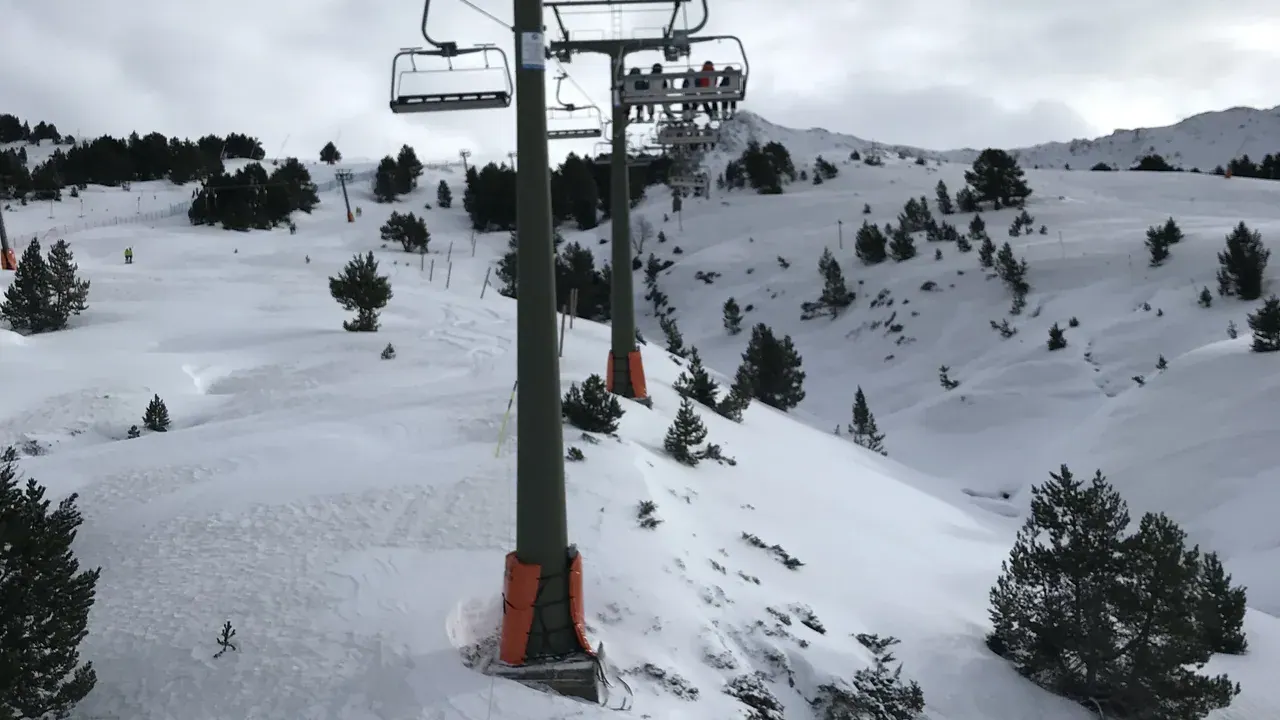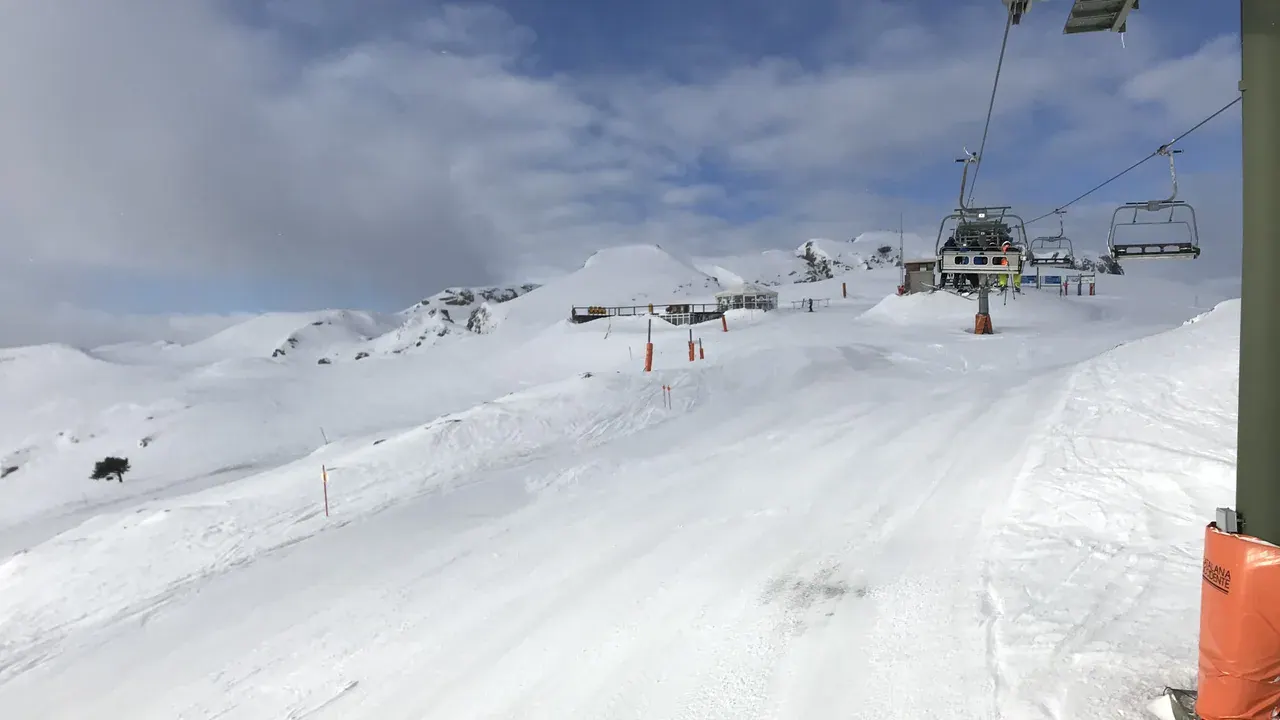
One of Baqueira Beret's biggest draws is that it is genuinely snow-sure — reliably the deepest, most dependable snow of any resort in the Pyrenees. That's not marketing; it's geography. Here's why the snow falls the way it does, how much you can expect, and when it's at its best. For picking your dates, see our when to ski guide.
Why Baqueira gets so much snow
The reason is the resort's position and orientation. The Val d'Aran is the only valley in Spain that sits on the northern, Atlantic side of the Pyrenees — its rivers drain north to the Atlantic via the Garonne, not south to the Mediterranean, which is exactly why the valley is so green in summer and so snowy in winter. That Atlantic exposure means Baqueira catches the moisture-laden weather fronts rolling in off the ocean that largely bypass the resorts on the range's southern, drier side. Combine that with north-facing slopes that keep the snow colder and longer, and real altitude — the ski area climbs from a 1,500 m base to about 2,610 m at the top of the Cap de Baciver lifts, with almost all the pistes above 1,800 m — and you get snow that falls deep and lasts, giving one of the most reliable snow records in southern Europe and the single biggest reason Baqueira out-snows its Pyrenean rivals.
How much snow does Baqueira get?
Figures vary by source and by winter, but the picture is consistent: a typical winter delivers several metres of cumulative snowfall — most estimates put it around 6 to 10 metres over the season — which compresses into a solid mid-winter base. At peak season the base depth commonly sits between about 1 and 3 metres, deepest on the higher Beret and Bonaigua sectors. Even in a leaner year, the altitude and north-facing aspect keep the pistes covered.
Where nature falls short, snowmaking fills the gap: Baqueira runs one of the biggest snowmaking systems in the Pyrenees — around 850 snow cannons covering roughly 58% of the skiable area (a system it keeps expanding, with new guns added again for the 2025–26 season), with the core Baqueira sector some 93% covered. That's why the main runs stay skiable through a thin natural-snow spell and why the resort can open early and hold on late into spring.
Reading the snow report
Before a ski day, check the resort's daily snow report — and know what the numbers mean. The base depth (often given for the lower and upper mountain) tells you how much snow is underfoot; on the higher Beret and Bonaigua sectors it's usually deepest. Fresh snowfall in the last 24–48 hours flags a powder day. And the count of open lifts and kilometres of piste tells you how much of the mountain is actually running — useful early or late in the season, or after a big storm when avalanche work closes the highest terrain for a while.
When is the snow best?
- January and February are the prime months — back-to-back Atlantic low-pressure systems pile up fresh snow, and the sustained cold keeps the pack in good shape. Early February is often the snowiest stretch of all.
- December builds the base and covers the Christmas holidays, though conditions vary early season.
- March into early April offers longer, sunnier days on a deep spring base — great for cruising, with the snow softening in the afternoons.
The resort's season typically runs from around late November/early December to early April, lift and snow conditions permitting. For the month-by-month breakdown, see when to ski Baqueira.
Making the most of the snow
When it dumps, Baqueira's off-piste and freeride terrain is some of the best in the Pyrenees — but it needs care, avalanche awareness and ideally a guide. On the pistes, a fresh fall is the time to be first up the lifts; the piste guide shows where each level should head. Whatever the conditions, check the resort's daily snow report before you set out, and carry the right gear — see our ski & board rental guide if you're not bringing your own.
Frequently Asked Questions
Is Baqueira Beret snow-sure?
Yes — it's one of the most snow-reliable resorts in the Pyrenees. Its north-facing, Atlantic-facing position captures moisture-laden fronts that bypass drier southern resorts, its terrain climbs from a 1,500 m base to about 2,610 m (with almost all the pistes above 1,800 m), and it has extensive snowmaking to back up the natural snow.
How much snow does Baqueira get?
It varies by winter, but a typical season brings several metres of cumulative snowfall — most estimates around 6 to 10 metres — building a peak-season base commonly between about 1 and 3 metres, deepest on the higher Beret and Bonaigua sectors.
When is the snow best at Baqueira?
January and February are the prime months, when Atlantic storms and sustained cold deliver the deepest, most reliable snow — early February is often the snowiest week. December builds the base, and March into early April gives long, sunny days on a deep spring base.
When does the Baqueira ski season run?
Typically from around late November or early December to early April, snow and lift conditions permitting. The heart of the season, and the best snow, is January and February.
Does Baqueira have snowmaking?
Yes, and a lot of it — around 850 snow cannons covering roughly 58% of the skiable area, with the core Baqueira sector about 93% covered. That extensive system protects the main runs through lean natural-snow spells and lets the resort open early and stay open late.
Why does the Val d'Aran get so much snow?
Because it's the only Spanish valley on the northern, Atlantic side of the Pyrenees — its rivers drain to the Atlantic via the Garonne. That exposure lets it catch the wet Atlantic weather fronts that miss the drier resorts on the range's southern side, and, with north-facing slopes above 1,800 m, the snow falls deep and lasts.