Baqueira Beret has one of the best food scenes of any ski resort anywhere, and much of it is rooted in Aranese mountain cooking — hearty, produce-led and distinct from the Catalan and French kitchens on either side. Here's what to eat and where. See the full list in our restaurants guide.
The dishes to try
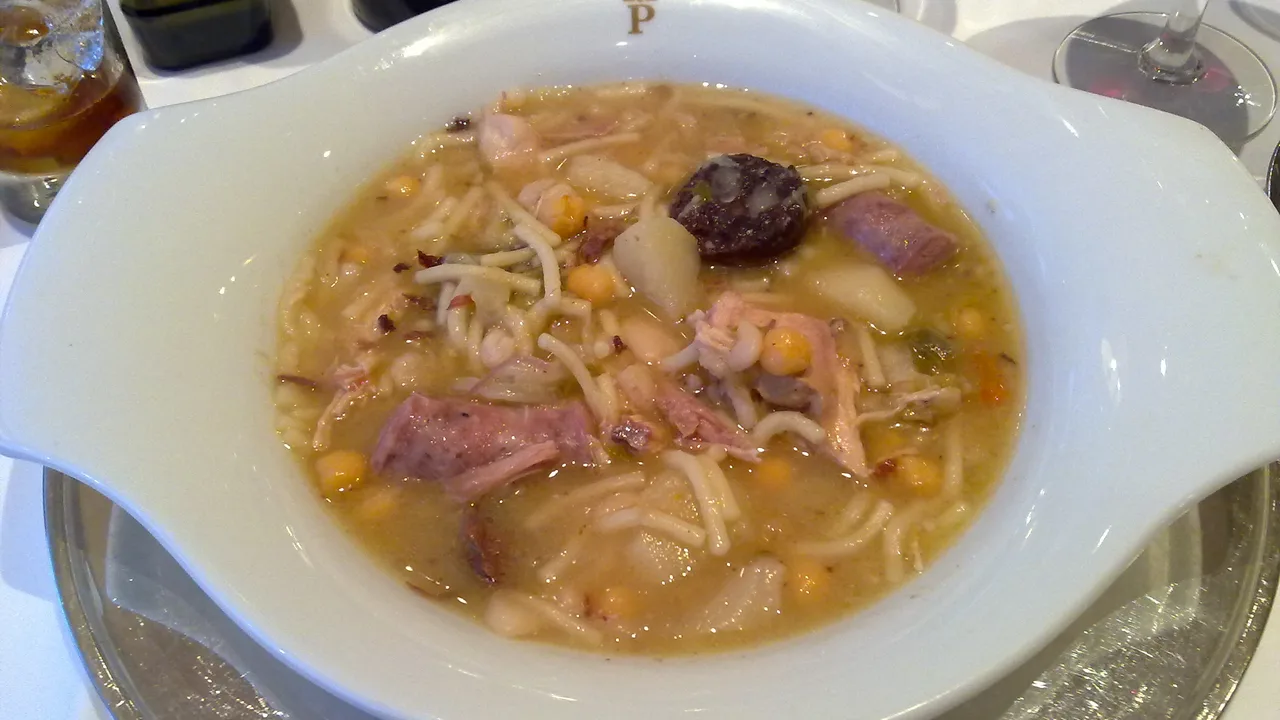
- Olla aranesa (Aranese olha aranesa) — the valley's signature dish: a hearty stew of white beans, noodles, sausage (butifarra) and a big meatball (pilota) with assorted mountain meats. It began as a snowed-in winter meal, using what the pantry and the hunt could provide to keep the cold at bay — the Aran's own cousin of the Catalan escudella, and exactly what you want after a day on the snow.
- Trout a la llosa — river trout grilled on a hot stone slab, a mountain classic.
- Civet — a rich, slow-braised game stew, classically wild boar (civet de jabalí), the kind of dish the long Pyrenean winters were built around.
- Aranese charcuterie and mountain meats — cured sausages, slow-cooked and grilled meats, bolhs (broths) and country pâtés, and game in season.
- French-influenced dishes — because the Aran opens toward France, you'll also find foie gras, magret (duck breast) and duck confit on many menus, a taste of Gascony on the Spanish side of the range.
- Calçots (in winter) — the Aran is part of Catalonia, so in the cold months you may catch the region's beloved ritual: calçots, long sweet spring onions charred black over the flames, peeled at the table and dunked in a nutty romesco sauce. Their season runs roughly December to March, squarely across the ski winter — messy, communal and delicious.
- Mei i mató — soft mató cheese drizzled with honey, the traditional sweet finish.
- Bagergue cheese — the high village of Bagergue is known for its artisan cheese and charcuterie; the family-run Formatgeria Tarrau there makes cow- and sheep-milk cheeses you can taste at source.
Caviar d'Aran — the valley's surprise
The Aran's most unexpected delicacy is caviar. In the lower-valley village of Les, the Caviar Nacarii farm raises sturgeon in the cold, clear waters of the young Garonne and produces caviar by traditional methods — one of very few caviars made in Spain. You can visit the farm and taste it, and it turns up on the valley's better menus. It's the clearest sign of how seriously the Val d'Aran takes its food.
Where to eat it
The valley's restaurants range from rustic bordas (converted stone barns) to refined tables:
- La Borda Lobató — the oldest borda in Baqueira, for traditional Aranese cooking.
- Ticolet — a Baqueira 1500 fixture since 1976, for well-made Aranese and Catalan mountain cooking with views over the Val de Ruda.
- Taverna Eth Bot — tapas and Aranese classics in a 17th-century Salardú farmhouse.
- Casa Irene in Arties and Casa Perú in Bagergue — the celebrated village names for a special dinner.
- Tauèrna Urtau — the legendary Basque-style pintxos counter on the square in Arties, going since 1963; pile up a plate and pay by the toothpick.
- Eth Hurat — a cosy little spot in old Vielha for raclette melted over potatoes and jamón alongside Aranese dishes.
- Era Coquèla — a big, long-running favourite on Avenguda Garona in Vielha, one of the valley's most consistently loved tables for traditional Aranese cooking.
- Era Lucana — another long-established Vielha room, with a leafy covered terrace and a broad menu of grilled meats, rice dishes and mountain classics. The dependable all-rounder when the group cannot agree.
- Casa Turnay in Escunhau — traditional Pyrenean cooking by an open fire, going since 1977, for olla aranesa, grilled meats and game in season.
- Casa Tana in Arties — a relaxed, good-value spot for hearty grilled meats (entrecôte and chuletón over the coals).
- Es Arraïtzes in Garòs — a Michelin-Guide kitchen blending traditional Aranese cooking with the flavours of Peru, and Eth Bistro in Vielha for a Repsol-Sol Mediterranean dinner if you want something more refined.
- Eth Cornèr — an informal restaurant-bodega in old Vielha for olla aranesa, game and a daily board of earthenware-pot dishes.
- Casa Rufus in the tiny village of Gessa, and Era Caseta des deth Mestre on the square in Tredòs — two small, traditional houses for slow-cooked Aranese home cooking (tortilla with ceps, olla aranesa, game).
- El Portalet in Bossòst — a Repsol-Sol, Michelin-Guide kitchen for creative mountain cooking if you're at the western end of the valley.
- On the slopes, lunch at altitude is half the fun: Cinco Jotas Grill at 1,800 m for acorn-fed Iberian ham by an open fire, the casual La Choza below it for burgers and finger food between runs, or Bar-Restaurante 2.200 for tapas on a terrace with huge peak views.
For the top end, the valley even has tables in the Michelin Guide — among them Eth Bistro and Era Coquela in Vielha — proof that the Aran's food reputation runs well beyond the après-ski, from stone-barn stews to fine dining a few kilometres apart.
One thing to know: Aranese and Spanish dinners run late — 9–10pm is normal, so pace your day accordingly.
Frequently Asked Questions
What is the traditional food of the Val d'Aran?
Aranese mountain cooking — olla aranesa (a hearty stew), trout a la llosa (grilled on hot stone), cured meats and charcuterie, artisan cheese from Bagergue, and mei i mató (mató cheese with honey) to finish.
What is a borda?
A borda is a traditional stone barn, many of which have been converted into rustic restaurants serving Aranese cooking. La Borda Lobató is the oldest in Baqueira.
Where is the best food near Baqueira?
The Val d'Aran is known for its dining. Standouts include La Borda Lobató and Ticolet at Baqueira, Taverna Eth Bot in Salardú, and the celebrated Casa Irene in Arties and Casa Perú in Bagergue; Vielha has a Repsol-Sol table at Eth Bistro and a long-loved traditional room at Era Coquèla, and Garòs has the Michelin-Guide Es Arraïtzes.
Does the Val d'Aran really make caviar?
Yes — the Caviar Nacarii farm in the village of Les raises sturgeon in the cold, clear waters of the young Garonne and produces caviar by traditional methods, one of the few caviars made in Spain. You can visit the farm and taste it, and it appears on some of the valley's better menus.